
The Alchemist's Shadow Is Here A Dark Fantasy of Blood, Secrets, and Sacrifice

Some stories wait in the dark until the right moment to step forward.
Today, I am thrilled to announce the release of my new book, The Alchemist's Shadow, a dark, atmospheric fantasy filled with forbidden alchemy, blood magic, haunted forests, sinister faith, family secrets, and the kind of choices that leave scars.
This book has lived with me for a long time. I wrote it during my break from publishing new titles, in that strange quiet space where a story can grow in private. It followed me through the pause. It waited while other things shifted. It stayed there, patient and shadowed, until it was finally time to bring Imesda Schatten’s world into the light.
Or perhaps, more accurately, into the darkness.
A book born from shadow and silence
There is something fitting about a book called The Alchemist's Shadow coming from a quieter period in my writing life.
During my break from publishing new titles, I did not stop imagining worlds. I did not stop hearing characters speak. I did not stop following strange ideas down darker paths. Some stories demand to be written quickly. Others need to sit in the back of the mind, gathering dust, teeth, and secrets.
This was one of those stories.
It began with a question that would not leave me alone: what if a plague was not only an illness, but a debt?
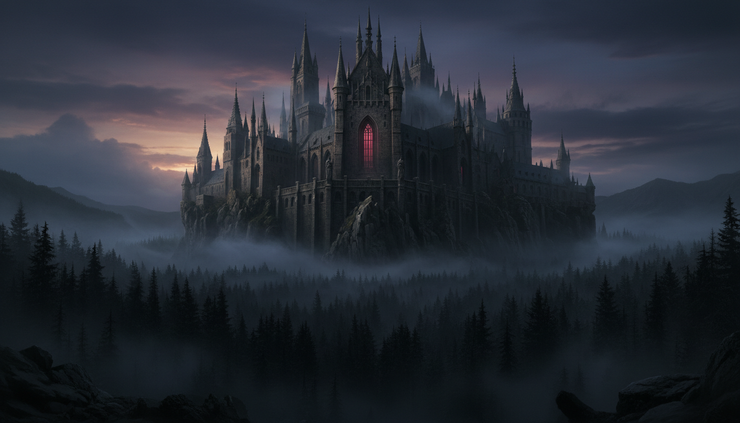
From there came the Crimson Blight, a disease that feeds on blood and carries something far older than contagion. Then came the Marches, a land shaped by founding families, buried oaths, and a Church that has spent centuries deciding which truths deserve to survive. Then came Volkov Castle, with its glass, fire, and forbidden formulas.
At the centre of it all stood Imesda Schatten.
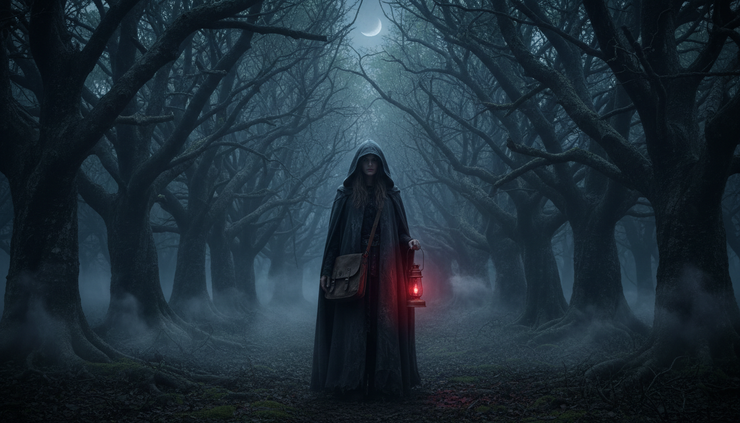
She is brilliant, guarded, and far more comfortable with alchemical instruments than with people. She has spent seven years working in the shadow of Volkov Castle, where the rules of matter feel safer than the rules of trust. In her laboratory, she can examine, test, burn, distil, and name things. People are harder. Faith is harder. Family is the hardest of all.
When the Crimson Blight reaches the castle, Imesda expects another disease to dissect. She has training. She has discipline. She has instruments waiting beneath lamplight.
Then she finds an ancient mark in the flesh of the dying.
And the same mark begins to burn beneath her own skin.
The Crimson Blight is more than a disease
The plague at the heart of the book is not random. It does not move through the Marches by chance. It is not simply something that can be cured if the right formula is found quickly enough.
The Crimson Blight is tied to an old blood pact, sworn by the founding families of the Marches. A pact made for survival. A pact maintained by sacrifice. A pact the Church knows far more about than it has ever admitted.
That was one of the parts of the story that fascinated me most while writing it. Disease, in fantasy, can be terrifying on its own. But a plague with memory is something else. A plague that remembers a promise. A plague that reaches for certain bloodlines. A plague that exposes the foundations of a kingdom, a Church, and a family.
Imesda is not facing a simple outbreak. She is facing the return of a debt that was never truly paid.
The more she investigates, the more the world around her changes shape. The Church’s history begins to look less holy and more deliberate. Centuries of executions and silence take on new meaning. The sacrifices of the past no longer seem like isolated tragedies. They may have been chosen. They may have been arranged. They may have been necessary, or they may have been unforgivable.
That tension sits at the heart of the book.
What does survival cost when the price is paid in blood?
And who gets to decide which life is worth offering?

Imesda Schatten was never meant to be safe
Imesda begins the story in a place that feels controlled, at least to her. Volkov Castle may be cold and full of danger, but her laboratory has rules. Alchemy has structure. A formula either works or fails. A reaction can be observed. A substance can be named.
The Crimson Blight takes that safety from her.
As the sickness spreads and the ancient mark burns beneath her skin, Imesda is forced to look beyond her instruments. Her father’s forbidden notes become more than old pages. Her mother’s sealed secrets become more than painful relics. The past she thought she understood begins to fracture.
And then there is Isme.
Imesda’s sister may still be alive.
That possibility changes everything. It turns history into a wound that has never closed. It gives Imesda hope, but hope in this world is rarely gentle. It asks for courage. It asks for risk. It asks her to leave the safety of stone walls and lamplight and enter a forest that remembers every oath made in blood.
The Black Forest is not simply a setting in this story. It is a presence. It watches. It wakes. It holds old bargains beneath its roots. Something beneath the Heartstone has begun to stir, and Imesda cannot solve that mystery from behind a locked laboratory door.
She has to step into the dark herself.
A sinister Church and a pact that refuses to die
I have always been drawn to stories where institutions hide rot beneath ritual.
In The Alchemist's Shadow, the Church stands as one of the most powerful forces in the Marches. It has shaped memory, punishment, belief, and fear for centuries. It knows the truth about the pact, but truth is dangerous when it threatens authority.
The Church has buried what it could beneath executions, silence, and carefully selected sacrifices. It has turned old bargains into doctrine and hidden blood beneath ceremony. By the time Imesda begins to uncover what really happened, the machinery of control is already moving against her.
That gives the story its pressure. Imesda is not only racing against a plague. She is racing against people who would rather preserve a lie than face what their faith has protected.
The book asks difficult questions about belief and power:
When does protection become control?
When does tradition become cruelty?
When does sacrifice stop being noble and become murder?
Can a pact made by ancestors bind those who never agreed to it?
These questions do not have easy answers in the story, because Imesda does not live in an easy world. Every choice carries a cost. Every truth opens another wound.

Konrad Voss brings danger, distrust, and uneasy loyalty
Imesda is not entirely alone.
Konrad Voss, a mercenary captain with his own reasons for distrusting the Church, becomes one of the few people willing to stand beside her. He is not a shining rescuer. He is not there to make her path simple. He comes with his own scars, his own suspicions, and his own reasons for keeping certain truths close.
That made him deeply enjoyable to write.
Konrad understands violence in a way Imesda does not. Imesda understands hidden patterns in a way Konrad might miss. They move through danger differently, and that creates tension between them. Trust is not instant. It has to be tested. In a world where every secret has a price, even an ally can become a risk.
Their connection is shaped by pressure. The Church is closing in. The Blight is reaching for Imesda’s heart. The Black Forest is waking. There is no room for easy comfort, yet there is still room for loyalty, wit, suspicion, and moments of humanity in the middle of dread.
Those quieter moments matter to me. Dark fantasy needs danger, but it also needs breath. It needs the flicker of a candle before the door opens. The shared glance before a terrible choice. The hand offered when no one is sure it will be accepted.
The world of the Marches is built on old blood
The Marches in this book are not just a backdrop. They are a land shaped by fear, inheritance, and old debts.
The founding families made choices long before Imesda was born, but those choices still reach into the present. That is one of the central threads of the story. The past is not dead history in this world. It is active. It is hungry. It presses its fingers into the lives of people who may not even know what was promised in their names.
The Heartstone, the Black Forest, Volkov Castle, the Church, the family records, the sealed rooms, the forbidden notes, all of them form part of a world where memory has weight.
I wanted the setting to feel beautiful and threatening at the same time. A place of cold stone and red glass. A place of pine shadows and old bones. A place where knowledge can save a life or condemn one. A place where the truth has been hidden for so long that uncovering it feels almost like an act of violence.
If you enjoy gothic fantasy, that is the atmosphere waiting here.
Expect:
Haunted forests with roots in ancient magic
Forbidden alchemy and dangerous experiments
A plague with supernatural origins
A Church with blood on its hands
Family secrets that refuse to stay buried
Morally complicated characters
Betrayal, survival, and sacrifice
The darkness in this book is not there for decoration. It shapes the choices. It tests the characters. It asks what they are willing to lose, and what they are willing to become.
What waits inside The Alchemist's Shadow
At its heart, this is a story about a woman who must stop hiding behind certainty.
Imesda trusts evidence. She trusts formulas. She trusts the clean logic of alchemy. Yet the mystery before her is tangled in faith, bloodline, grief, betrayal, and ancient magic. To survive it, she has to face the parts of her past that hurt most.
Her father’s forbidden notes may hold answers.
Her mother’s sealed secrets may hold worse ones.
Her sister may still be alive.
The next sacrifice has already been chosen.
And the answer lies deep within a forest where the trees remember every oath made in blood.
That is the pull of this book. It is a mystery, a dark fantasy, and a story of survival wrapped together. It follows a character who has spent years trying to keep pain contained, only to discover that some wounds are tied to the fate of an entire land.
The final choice before Imesda is brutal in its simplicity.
Renew the pact.
Break it.
Or pay the debt with blood of her own.
Step into the shadow
Releasing a new book after time away from publishing feels both thrilling and strange. There is joy in it, of course. There is also that familiar nervousness that comes with opening the door and letting readers enter a world that lived privately for so long.
But more than anything, I am excited.
I am excited for readers to meet Imesda Schatten. I am excited for them to walk the halls of Volkov Castle, to step beneath the trees of the Black Forest, to uncover the truth behind the Crimson Blight, and to decide for themselves what they would do if survival demanded a sacrifice.
If you enjoy gothic fantasy, sinister churches, haunted forests, forbidden alchemy, ancient magic, betrayal, and supernatural suspense, this book was written for that delicious chill at the back of the neck.
The Alchemist's Shadow is available now.
You can grab your copy of The Alchemist's Shadow on Amazon and begin the journey into the Marches today.
The pact is weakening. The forest is waking. The blood remembers.
Step into the shadow.


Comments